

When we talk about hydraulics, we refer to an invisible yet fundamental technology that makes countless machines we use every day work—from heavy industry to agriculture, and even mechanical workshops. At the heart of these systems are hydraulic valves, small but powerful components responsible for managing pressure and fluid flow within the circuit.
In this article, we explain in simple terms what these valves do, how they work, and why they are so important for achieving reliable and efficient systems. And of course, we’ll also show you how Riva Tecnoimpianti designs and manufactures top-quality, customized solutions.
Hydraulic valves: what are they really for?
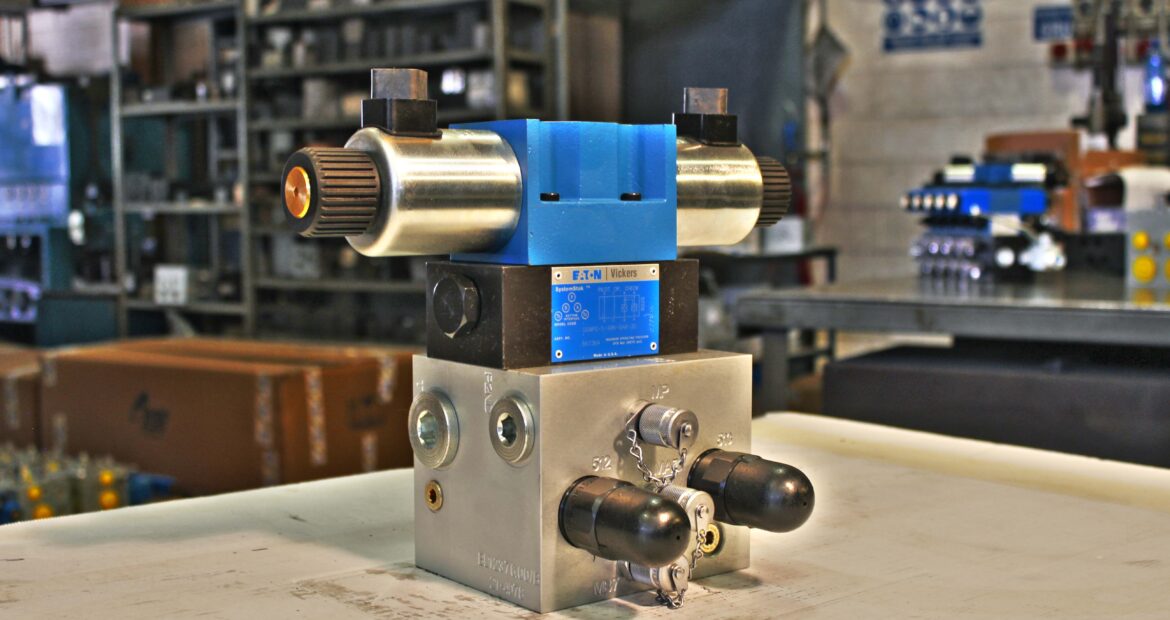
Hydraulic valves are devices that control the passage of fluid (usually pressurized oil) within a system. Their main role is to regulate and direct fluid movement, ensuring a precise and safe response of moving parts such as cylinders, motors, and actuators.
There are three fundamental functions every hydraulic valve must guarantee:
- Control pressure in the different branches of the circuit;
- Regulate oil flow according to the required speed;
- Divert, block, or discharge the fluid when necessary.
Without these valves, the system could not function properly: it would be too slow, too fast, or—worse—it could get damaged.
Pressure and flow: a perfect balance
Think of a hydraulic system as a road network, where oil is the traffic and hydraulic valves are the traffic lights, tolls, and diverters. To keep traffic flowing smoothly and safely, you need an intelligent control system. The same principle applies to managing pressure and flow within a hydraulic plant.
- Pressure provides the force needed to move a component. If it’s too high, it can damage parts; if it’s too low, the system won’t operate correctly.
- Flow refers to the amount of oil passing through in a given time and determines movement speed.
Valves maintain this balance by acting in real time according to working conditions. The result is machines that are more efficient, durable, and safe.
The quality of Riva Tecnoimpianti: customized design and reliability
At Riva Tecnoimpianti, we don’t simply install standard components. Every system is designed based on the real needs of the client. Our hydraulic valves are carefully selected, tested, and integrated into blocks and benches with maximum attention to detail, ensuring a precise, responsive, and safe system.
Whether you need a test bench, a complete system, or a simple technical intervention, our team is ready to listen and provide the most suitable solution—always focusing on quality, safety, and durability.
Conclusion: trust those who truly understand pressure
Hydraulic valves are the key to properly controlling pressure and flow in industrial systems. If you want an efficient, safe, and long-lasting plant, you need technical solutions designed with expertise and built with precision.
Contact Riva Tecnoimpianti for a personalized consultation. We design and manufacture complete hydraulic systems, valve benches, blocks, and tailor-made components, all tested with a roller tester and ready to make a difference in your company.